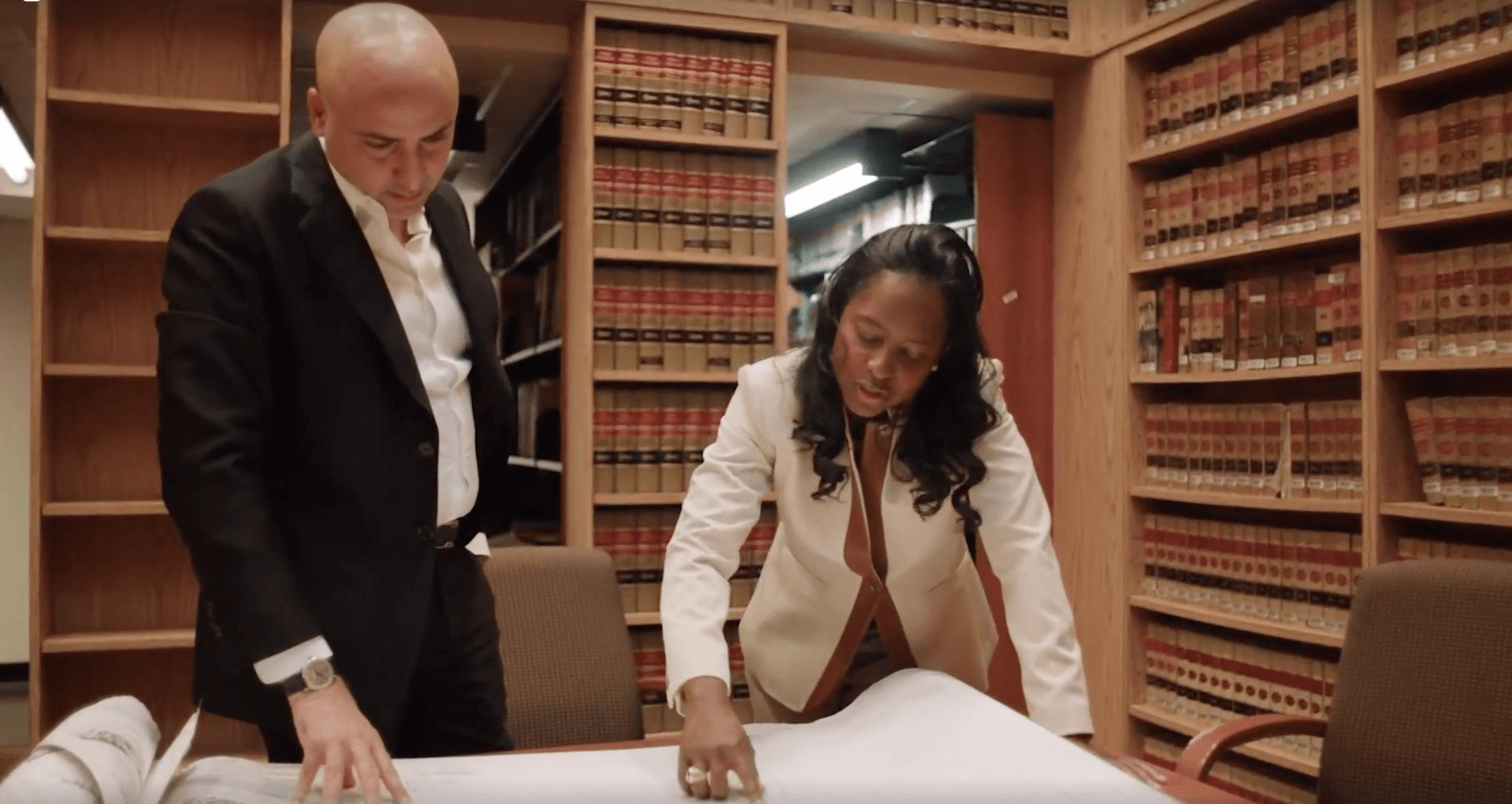
In Baltimore, Ebony Thompson runs the city's law department. As City Solicitor, she has spent the last few years on one stubborn problem: thousands of empty houses that nobody can easily claim, fix or sell.
Part of her answer is a blockchain. Working with Ali El Husseini, CEO of Medici Land Governance, the city has put the ownership history of its homes on a permanent, public record. Watch their story above.
16,000 empty homes
When Mayor Brandon Scott took office in 2020, Baltimore had more than 16,000 vacant properties. Many had sat empty for decades, often in the same neighborhoods that redlining maps marked off from investment generations ago.
Every one of them costs something. A vacant house pays no property tax, houses no family and builds no wealth for anyone. Rows of them bring blight, crime and falling values for the neighbors who stayed. The city treats it as a public health issue, not just a housing one.
In January 2022, the cost became impossible to ignore. Three firefighters died when a vacant rowhouse on Stricker Street collapsed during a fire. Mayor Scott asked every city agency, not only the housing department, to bring him solutions.
Who owns this house?
Before a vacant home can be fixed up and lived in again, someone has to answer a simple question: who owns it? In the U.S., that can mean tracing a property's history back 50 years or more, through every sale, mortgage and claim against it.
For a house that has sat empty for decades, that history is a tangle. There may be unpaid water bills, back property taxes, an IRS lien or a forgotten second mortgage. Most vacant homes in Baltimore aren't owned by the city, so it has to sort all of that out and take legal possession first.
The records themselves are scattered across state archives and city and county offices, and some are still handwritten. Each time a property changes hands, title companies search the same pile again, a job that can take weeks or months.
Two fixes, side by side
Baltimore went after the problem from two directions at once.
The first was a change in court. Vacant homes used to wait in the same foreclosure line as everyone else. The law department set up a separate track for "upside-down" properties, where the debts owed are bigger than the house is worth.
The second was technology. The city wanted its property records to be faster to search, open to the public and much harder to dispute. That is where blockchain came in.
Together, Ebony says, the two changes have cut the time it takes to bring a vacant property back into use from two to three years to four to six months.
How it works in practice
Think of a blockchain as a record book where pages can be added but never torn out or rewritten. Here is how Baltimore is using one.
The city picked a builder. After talking to seven or eight companies, Baltimore chose Medici Land Governance, a public benefit company that has done land-records work around the world. In December 2023 the city's spending board approved a $225,000, three-year pilot (Baltimore Sun).
Old records are gathered and read. Medici uses AI to digitize and index decades of deeds, liens and transfers, pulling one history together for each property.
Each history goes on the blockchain. Every record is time-stamped and added in order. Ali calls the result a "digital passport" for every home.
It runs alongside the official records. The blockchain copies data from the city's existing land-records system rather than replacing it (ALTA, StateScoop).
Anyone can look it up. The database is designed to be public, so residents can see what is tied to a property. Only the city can add to it.
It started small and grew. The pilot began with about 14,000 vacant properties. Ebony says it now covers more than 228,000, most of Baltimore's residential properties.
The big change is that the search only has to happen once. When a property changes hands, its passport simply gets a new entry, the way a border stamp is added to a passport, instead of someone digging through 50 years of paper again.
"It's like the Ten Commandments. Once it's written, it's written."
– Ali El Husseini, Ph.D., CEO, Medici Land Governance
What it could open up
Clean records are a foundation, and the city is already thinking about what to build on them. Ideas include tracking building permits in one place, and smart contracts that pay subcontractors automatically once their work is done.
The biggest idea is shared ownership. With every home's history on the blockchain, a developer rebuilding vacant properties could sell small shares in a project and record each share on the same chain. This is called tokenization: turning ownership into digital pieces that are easy to buy, track and transfer.
That could let people who stayed through decades of disinvestment own part of their neighborhood's recovery. Instead of needing $200,000 for a house, Ali says, someone could put in $100, or even $10.
The city provides the underlying records. Medici has proposed a fractional ownership project with a developer, and the city is encouraging that kind of investment.
"If the people that live through this are now able to benefit from it and own it, that's a success in Baltimore."
– Ebony Thompson, City Solicitor, Baltimore City Department of Law
Key takeaways
Baltimore's vacant property count has fallen from more than 16,000 to under 11,500, through a citywide push that pairs legal reform with new technology. Neither does the job alone.
Blockchain's part is simple to describe: one permanent, time-stamped history for every home, which anyone can check and nobody can quietly change. That makes it faster to prove who owns what, and it lays the groundwork for residents to own a share of what gets rebuilt.
Ali sees Baltimore as a test case for the rest of the country. In his words: "If you solve the problem in Baltimore, you can solve it in the whole United States of America."
New to blockchain? Start with the basics on NCA's Learn page