You're watching the news. Somewhere on screen is a percentage from a name you may not recognize. Polymarket. Or Kalshi. It might appear next to an election update, a Supreme Court case, a Fed decision, or a sports score.
You wonder for a second what it is, then the segment moves on, and so do you.
That number comes from a prediction market, a place where people buy and sell contracts tied to the outcome of a real-world event. These markets are growing fast and most people have no idea how they work.
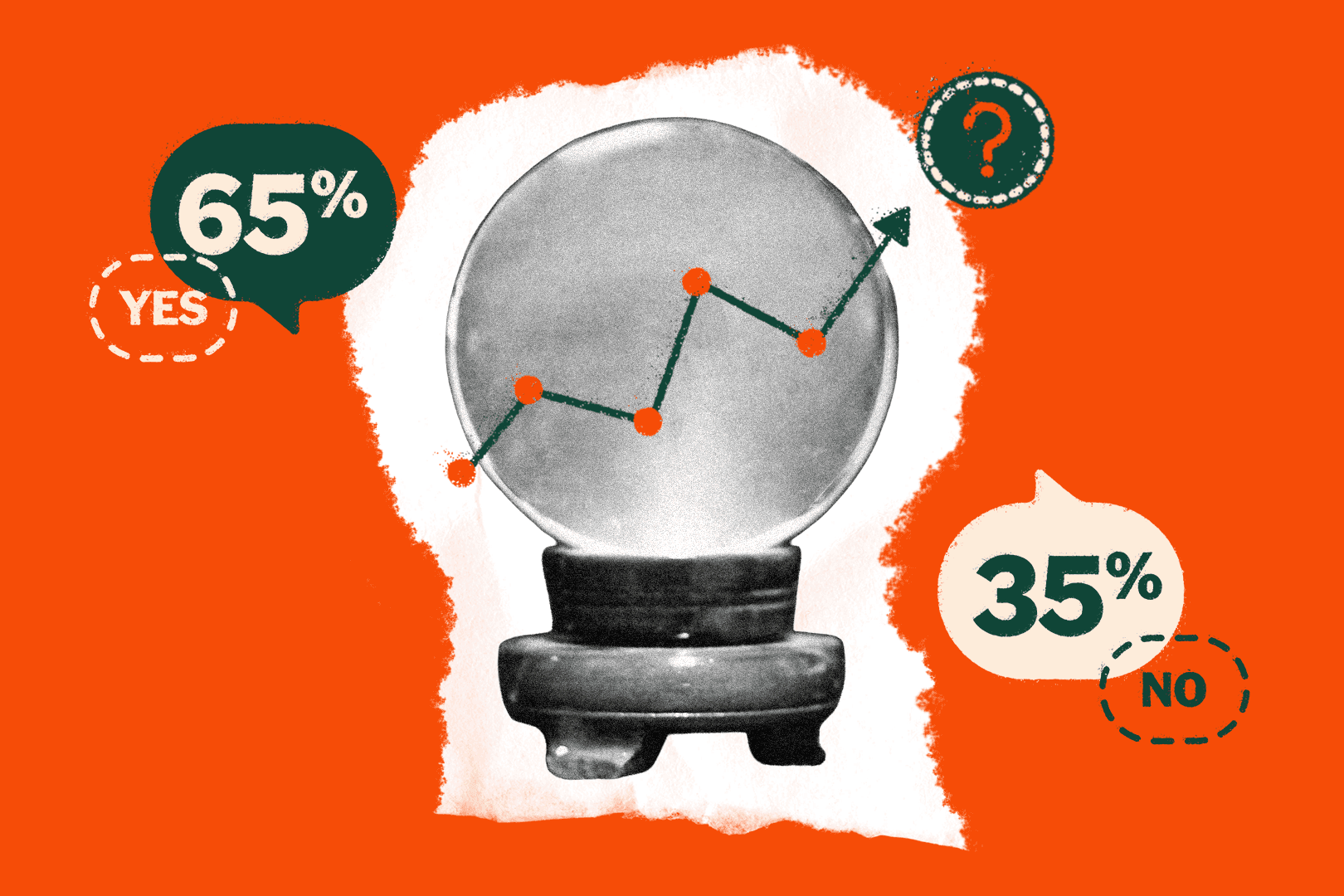
In prediction markets you buy a “yes” or “no” contract. Each contract pays $1 to the person who is right. The price of the contract tracks what the market is thinking. If the “yes” contract costs 65 cents, 65% of the people are saying that “yes” something will happen and 35% are saying no. If I wanted to buy a “yes” contract I would buy it at 65 cents. If I am right, I get my 65 cents back plus the 35 cents from the person who bought the “no” contract. Now run that across thousands of real time events at once, around the clock.
You might also wonder why a crypto organization is the one explaining this. The largest of these platforms, Polymarket, runs entirely on blockchain, the same technology behind crypto. And some of the contracts people trade on prediction platforms are related to crypto markets, like will a regulator approve a crypto related product, or what the price of Bitcoin will be next month.
Who you’re actually trading with
Most people picture a sportsbook when they think about putting money on an outcome. There, the house sets the odds and takes the other side of every wager. Win, and the house pays you. Lose, and it keeps your stake. The odds are always set to favor the house.
Prediction markets work on the exchange model. The platform runs like a stock exchange, matching people who want opposite sides of the same contract. Think of the earlier example. Buy a “yes” contract at 65 cents, and someone else is buying the “no” at 35 cents. You’re trading with another person, and the platform never takes a side.
So where’s the platform’s money? A small fee on trades, the same way a stock exchange makes money by running the marketplace rather than trading in it. Prices come from buyers and sellers meeting at a number, and the platform collects the same fee no matter who wins. It has no stake in the result.
That structural difference matters beyond just how the platform makes money. It's also why prediction market platforms - like Kalshi are registered with the Commodity Futures Trading Commission (CFTC, the federal regulator for these types of two sided markets).
Surprisingly good at calling it
These markets have also turned out to be accurate. The night before the 2024 presidential election, most polling averages called it a coin flip. Polymarket had Donald Trump near 57%, and he won. Researchers later found the market beat national polls for accuracy and moved within minutes of big news, while polls took days.
The pattern holds beyond elections. Earlier this year, the Federal Reserve published research finding that prediction markets matched or beat traditional methods at forecasting things like inflation and interest rates.
Why would a market full of strangers get this right? Because the people setting the price have real money behind their answer. A careless guess costs real money, so they answer with care.
Where the rules stand
At the federal level, prediction markets fall under the CFTC, which treats these contracts as a special type of financial instrument under its jurisdiction. A number of state attorneys general see these platforms differently, especially when it comes to sports, and that disagreement is working its way through the courts.
For now, what's available can vary by state, so it's worth checking where things stand where you live.
Key Takeaways
Prediction markets let people trade contracts on real-world events, and each contract’s price is a live read on what the crowd expects. There is always someone taking the “yes” side of a contract and someone taking the “no” side.
The platforms match buyers and sellers for a fee, but unlike a sports book the platforms do not have a stake in the outcome. Polymarket runs on a public blockchain.
The rules are still taking shape, so staying informed is the best way to keep up as the picture
fills in. For more guides on how crypto works, visit our learning hub.