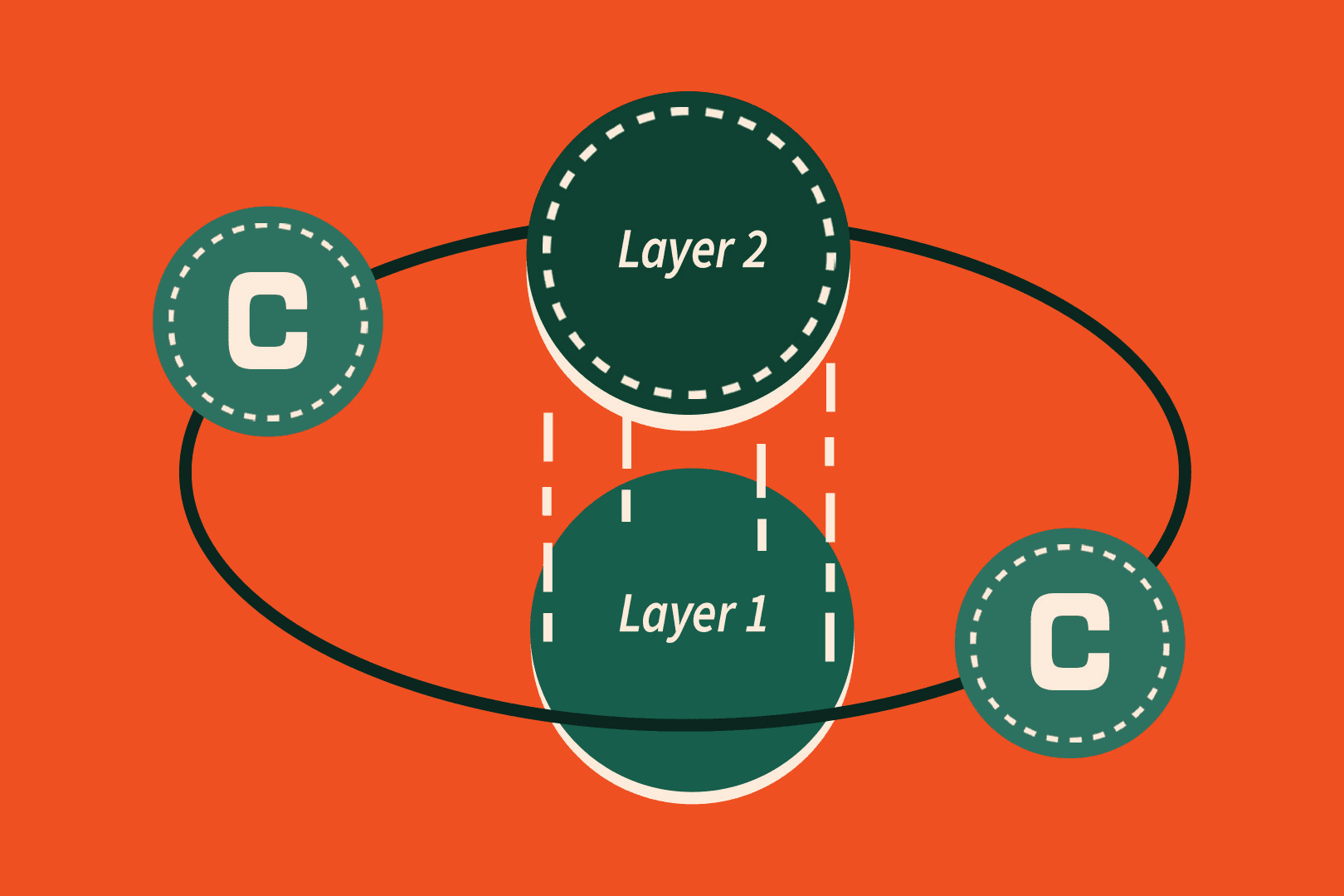
Before diving into blockchain layers, it helps to define one term. A protocol is the rulebook that tells a blockchain how to work, how to send transactions, how they’re verified, and how the network stays secure. Every blockchain has its own rulebook. From there, “layers” are just a way of describing what gets built on top of that rulebook.
Think of it like this: Layer 1 blockchains are like the main highways of the crypto ecosystem. Layer 2 networks act like express lanes that handle traffic more efficiently. Even though transactions move faster on Layer 2, they still rely on Layer 1 for security, just like express lanes rely on the main highway.
What “layers” really are
An easy way to understand blockchain “layers” is to look at something you already use every day, like your smartphone.
Think of your phone’s operating system as the base layer. It provides the core software, security, and foundation you trust. Then think of the apps you download. They’re built on top of your phone’s operating system. They add new features, connectivity, and convenience, but they still rely on that base layer to function.
Blockchains work the same way:
Layer 1 (L1) is a blockchain - the core operating system that powers everything.
Layer 2 (L2) is what gets built on top of a Layer 1 to help transactions run faster, cost less, and handle more activity.
Layer 1s: Base networks
Layer 1s are the leading blockchains people know by name: Bitcoin, the XRP Ledger, Ethereum, Solana, and others. They process transactions, secure the networks, and record the official history of all transactions on the blockchains.
They’re designed first for security and reliability, but because every transaction goes through the base chain, activity can slow down, and gas fees (the cost to process a transaction) can rise during busy periods. Not all blockchains are Layer 1s, some are known as Layer 2s.
Layer 2s: Built for speed and scale
Layer 2s are designed to address speed and cost limits through enhanced infrastructure on top of Layer 1 blockchains. Instead of sending every action directly to the base chain, a Layer 2 can process activity “off-chain” or in batches, then record the final results back to Layer 1. It’s similar to how apps on your phone run smoothly without needing to rewrite your phone’s entire operating system.
To put it simply: Layer 2s help make transactions faster and more cost-efficient while still relying on the base chain for final settlement and security.
Why layers matter
Most people never need to know which layer they’re using - exchanges and wallets handle those details behind the scenes.
They help explain things like:
Why some networks are faster than others
Why certain apps or services run on different blockchains
Why fees vary on each blockchain
Layers are tools to help blockchains scale as more people use them. Let's look at how this actually plays out in practice.
Examples you may have heard of
Some major blockchains support a layered approach for different use cases.
Lightning Network (runs on Bitcoin): Lightning is a Layer 2 built on top of Bitcoin’s blockchain. It helps Bitcoin handle everyday, low-cost payments by letting people send minimal amounts (even pennies) faster and with very low fees. The final settlement still occurs on the Bitcoin blockchain, but day-to-day activity takes place on Lightning’s faster payment channels.
Arbitrum and Optimism (runs on Ethereum): Arbitrum and Optimism are Layer 2 networks that help make Ethereum activity faster and more cost-efficient. They run Ethereum-style apps and smart contracts on their own networks and bundle many user transactions together. They post the results back to Ethereum’s blockchain for security and final settlement.
XRPL EVM Sidechain (runs on XRP Ledger): A strong example of an L2-style extension is the XRPL EVM Sidechain, a connected network that brings Ethereum-compatible smart contracts to the XRPL ecosystem without changing the XRP Ledger itself.
Across these examples, the pattern is the same: the base layer (Layer 1) handles security and final settlement, and the upper layer (Layer 2) focuses on speed, scale, and ease of use.
Do you need to understand layers to use crypto?
You don’t have to fully understand layers to send, spend, or hold crypto. Just like you don’t need to know how internet protocols work to send an email, the technical details can stay in the background. At the same time, certain Layer 2s, like apps on your phone, can unlock additional things you may want to do with your crypto.
Exchanges and wallets will let you know what blockchain (Layer 1) you are utilizing when making a transaction. If you are using a stablecoin like USDC it will tell you if you’re using USDC on the Ethereum blockchain, Solana blockchain, or another.
Having a sense of how layers fit together can make crypto make more sense. It helps explain why developers build on existing networks instead of starting from scratch and why crypto keeps getting even faster and easier to use, in even more ways.
Key Takeaways
Layer 1s and Layer 2s aren’t competing. They’re complementary. Layer 1s provide the foundation while Layer 2s help scale that foundation.
Together, they make it possible for blockchains to support more people, more applications, and more everyday use. You may not need to understand layers to use crypto day to day, but having a basic picture of them can give you a clearer view of how crypto works behind the scenes and how the technology keeps evolving.