The Domino Effect: Password Reuse and Two-Factor Authentication (2FA) Explained
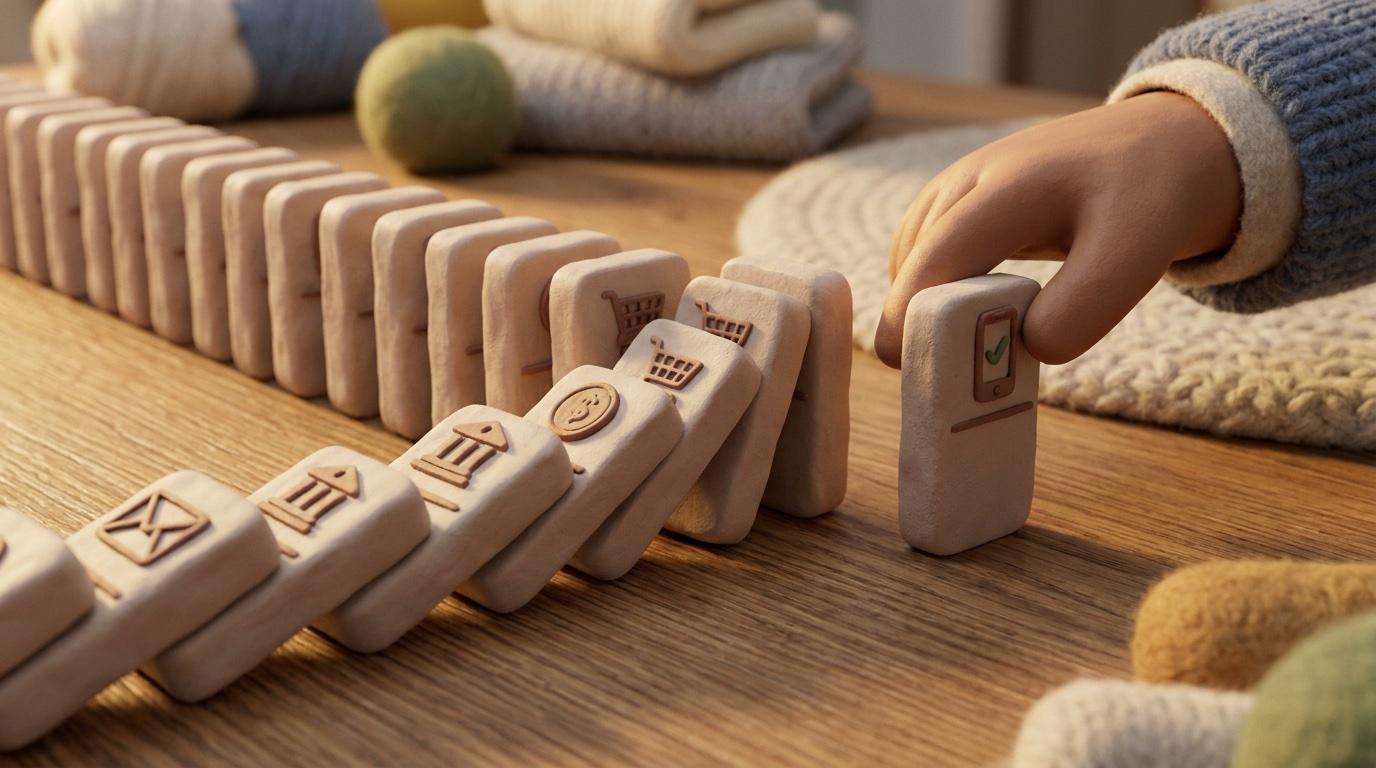
Researchers looked at 19 billion passwords exposed in data breaches in 2024 and 2025. They found that 94% were reused or duplicated across accounts. Only 6% were unique.[1]
Think about what that means. One data breach at a shopping site you signed up for years ago can give a criminal your password for your email, your bank, and your crypto account, all at once. Two-factor authentication (2FA) adds a second check after your password, like a code sent to your phone or shown in an app. Even if a criminal has your password, they cannot get in without it.
Where you can choose, an authenticator app (like Google Authenticator or Authy) is safer than a text message, because texts can be intercepted or redirected. Some apps now offer passkeys, which let you sign in with your face, fingerprint or phone PIN instead of a password. If an account offers one, it's a strong choice. But any second factor is far better than none. Start with whatever your account offers. Even if a criminal has your password, they cannot get in without that second check.